What cold water immersion does:
The benefits, graded.

People have been going from hot to cold for two thousand years. Here's how to do it well, and what the evidence says so far.
Heat, then cold, a few rounds through, finishing on the cold.
It's also one of the oldest habits in wellbeing. Two thousand years ago a Roman bath was a circuit: the warm room, the hot room, back through the warm, and then a plunge in the frigidarium, the cold pool.[1] In Finland, sauna has been part of ordinary life for more than a thousand years, and the cold water after it for just as long.[2] Nobody was waiting on a study. They kept doing it because of how it made them feel.
That's still why people do it. In the gyms and spas we fit out, heat and cold side by side is one of the set-ups we're asked for most. Ask someone coming off a contrast circuit how they feel, and the answer is rarely subtle.
The research is catching up, and unevenly. Some of it is solid, some of it is emerging, and a few of the famous claims don't hold. We'll show you which is which. None of that is a reason not to try it. It's a reason to try it properly, and pay attention to what changes.
Sauna first, typically 10 to 15 minutes in the heat. Then a short cold immersion. Three to five rounds, finishing in the cold.[3]
Mechanically, you're turning your body into a heat pump. Heat opens the vessels: heart rate up, blood out to the skin, and a cardiovascular load that's been described as comparable in some respects to moderate exercise.[4] Cold shuts them down again, with a sharp lift of alertness on the way in[5] and a measurable return to calm as you come out and settle.[6] Dilate, constrict, repeat. That's why a contrast session leaves you feeling like you've done something.
The come-down is the workout. You're not training muscle, and you're not building a shield against stress. You're training the return to calm. Every round is a rep of it: hard on, then deliberately off, then again. Cold measurably speeds that return.[6] Do it often enough and the return tends to come easier.[7] That's the part of our model we call Regulation, and recovered is what it gets you to.
You're not being fixed by the water. You're running a training cycle with two stressors instead of one.
Here's what the evidence says so far, and how well established each part is.
Enjoyment isn't a soft reason. The benefit of either half comes from doing it consistently, and people repeat what they like. A circuit that people look forward to is a practice that actually happens.
Contrast may help you recover, depending on how the session is run.[8] The clearest case is athletes in a congested run of competition, several matches in a week. Both contrast and cold on its own may ease soreness compared with resting, and neither beats the other.[9]
The most-quoted numbers come from experienced winter swimmers: around 11 minutes of cold water and 57 minutes of sauna a week, split across two or three sessions. Compared with people who didn't swim, they showed more brown fat activation and better metabolic function.[10] Those swimmers were in very cold water, roughly 2 to 8°C.[11]
Traditional Finnish sauna has one of the longest-running evidence bases in wellbeing. In a Finnish cohort of over two thousand men followed for two decades, four to seven sessions a week was associated with lower cardiovascular and all-cause mortality than once a week[12], and with a lower risk of dementia.[13] Associated with is the important part. When a trial put adults with heart disease through eight weeks of regular sauna, they got used to the heat, but their blood vessels and blood pressure didn't measurably change.[14] Cohort findings aren't trial outcomes. And all of it comes from traditional Finnish sauna at 80 to 100°C, not infrared.[15]
The Finnish pattern was never one long sit. It's rounds: heat, cool, rest, repeat, usually with company, and traditionally finishing on the cold.[16] Water pulls heat out of the skin far faster than air does, which is why a plunge sits next to a sauna and not a fan.
One limit. More rounds is not more benefit, though it can of course be enjoyable to do. Nobody has shown that stacking rounds adds adaptation, and what raises heat tolerance is the heat itself rather than the cooling in between.[17] The cold brings its own effects: the lift on the way in, and the come-down on the way out.[5] [6] And with your skin properly cold, going back into the heat feels a lot easier.

Start hot, alternate, finish cold. Three to five rounds. That's the shape, and it's been the shape for centuries.[16]
With one ceiling worth respecting: beyond about 30 minutes in a session there's no extra benefit.[18]
Anything at or below 15°C counts as cold water, and 12 to 15°C is not mild: the cold-shock response is already strongly triggered in that range.[19] Keep it short. Colder is not better. Matched to where you are is better.[20]
Ending cold preserves the metabolic benefit: your body does its own reheating, and that's where the brown-fat response happens. Reach for a hot shower straight after and you blunt it.[21] So give it a few minutes and let yourself come back up naturally. Settled and clear is the target, not wired. It's the least dramatic instruction on the page, and it's the one that separates a session from a dip.
Starting hot is the convention and it's a sound one. The research does suggest the order you take heat and cold in can change the physiological effect[22], which is an interesting open question, not a reason to second-guess a sequence that works.
So does contrast do more for you than cold on its own?
Head to head, across the measures tested so far, the two come out level.[23] That's the evidence today, and it's a young evidence base with a lot of interest in it.
What isn't in doubt is how a well-run session feels, and that the come-down gets easier with practice. So be your own study. Keep the rounds the same for a few weeks and notice how it does, or doesn't, change you: how you come down, how you sleep, how you feel the next morning. Change one thing at a time. Your experience is reason enough for you to do it.
After endurance or interval work, straight in: no waiting period.[24] If you've been lifting for size or strength, keep the cold out of that session. Not in the same session. A different session, or a different day. Cold straight after resistance training can blunt the adaptation you just trained for.[25]
Contrast has no special safety profile of its own. It carries the same risks as its components: everything that applies to heat applies to the hot half, everything that applies to cold applies to the cold half, and a session inherits both lists in full.[26]
On the cold: the gasp on entry is real (an involuntary gasp, fast breathing, a jump in cardiovascular strain) and it's the genuine hazard, particularly in open water and particularly early on.[27] Never hold your breath going in, and never put your face under as you enter. That combination carries a real arrhythmia risk, even in healthy people.[28]
On the heat: sauna isn't for you with a fever, aortic stenosis, unstable angina, severe low blood pressure on standing, or a recent heart attack. Alcohol and sauna is a genuinely dangerous combination. Not a caution: a hazard.[29]
Across both: if you have a heart condition, high blood pressure, an arrhythmia, or you're pregnant, talk to your doctor before you start.[30] People respond very differently, so the same session won't land the same way for everyone.[31] If you feel light-headed between rounds, sit down and stop. Never immerse alone in open water.
The heat and the cold both attract folklore. Here's what doesn't hold.
It won't treat depression. A meta-analysis of eleven randomised trials found no significant mood effect from cold exposure. The lift afterwards is real, but it isn't treatment.[32]
It won't make you sharper. Cooling the body enough to drop skin temperature measurably impairs performance on cognitive tasks. Alert, yes. Sharper, no.[33]
It won't extend your life. There are no human longevity studies for cold, and the heat-side findings don't transfer across to it.[34]
It doesn't detox you. Sweat is roughly 99% water.[35]
It doesn't kill viruses. That badly overstates what heat does.[36]
It isn't a fountain of youth. There's no evidence for an anti-ageing skin benefit.[37]
The real evidence is strong enough that it doesn't need the invented parts.
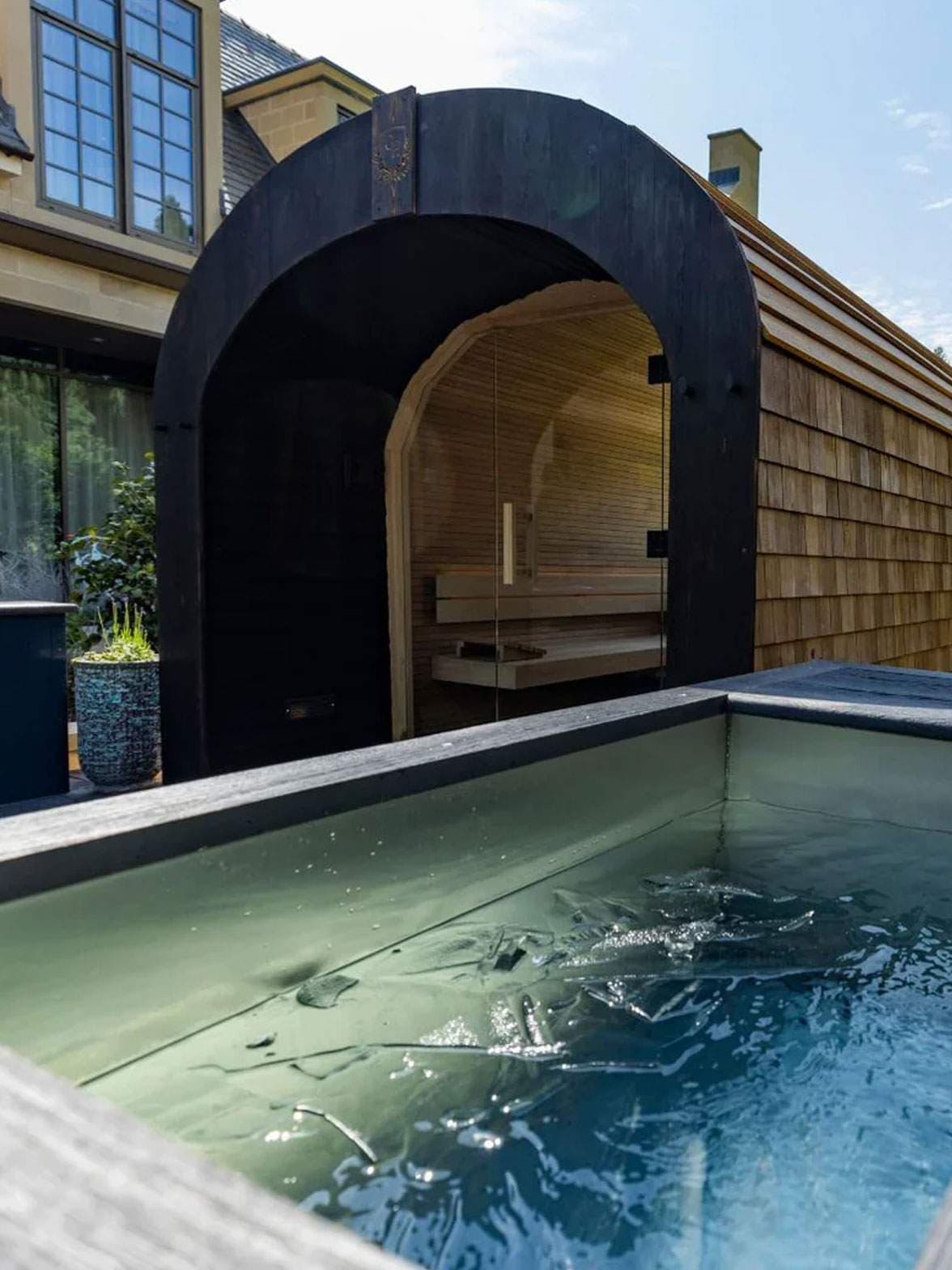
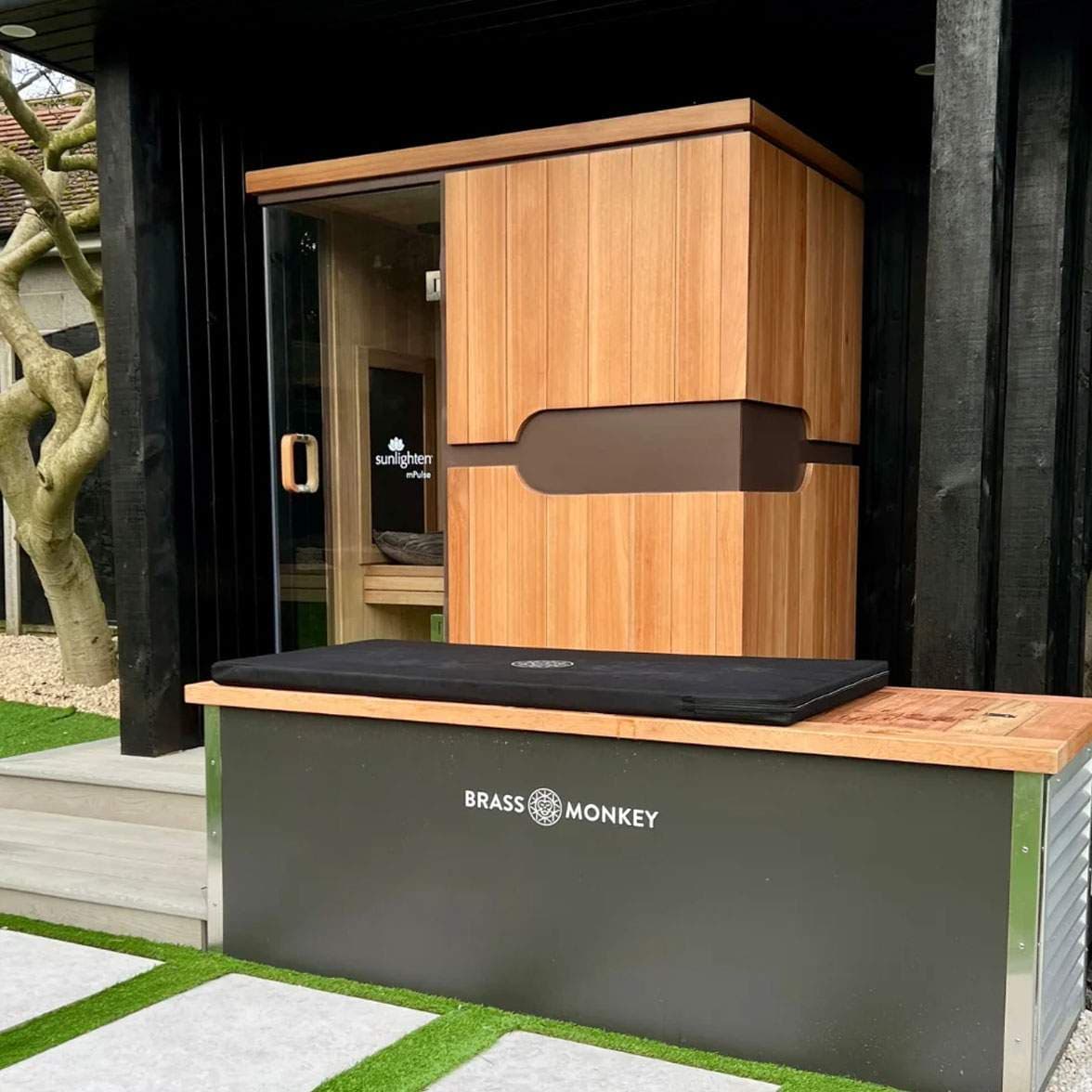
Probably. If you've got both, run the circuit.
If you've only got cold, you're not missing the main event. Just like sauna, cold on its own is a complete session. The evidence for it stands on its own, and adding heat isn't what makes it work.[38] Think of the sauna the way you'd think of adding a second exercise: it changes the session and gives you more to work with. It doesn't upgrade the cold.
Readiness is a trained feeling. It comes from having done hard things, and come back down. A contrast session gives you several rounds of both.
The benefits, graded.
The step-by-step protocol.
What a proper set-up involves.
Gyms, spas and hotels running it properly.
Evidence grading, and how we govern claims.
If you're planning a sauna and ice bath together rather than just reading about them, the contrast suite guide covers the practical side: how to specify and sequence the two, the mistakes that make a suite unusable, and how to run it properly once it's in.
Loading form…
Historical, not a health claim. Roman baths: tepidarium (warm), caldarium (hot), frigidarium (cold), usually taken in sequence.
Historical, not a health claim. Finnish smoke saunas from around 1000 CE; first written description 1112.
GREEN + BRAND. CWI-123 (bout length), CWI-84 (round count, Nordic convention).
CWI-208. Laukkanen & Kunutsor 2018, Mayo Clin Proc.
CWI-2. Johnson et al. 1977, J Appl Physiol.
CWI-109, CWI-162. Al Haddad et al. 2010, Auton Neurosci; Lundell et al. 2021, Front Physiol.
CWI-162 (the repetition claim, cross-referenced on that row). Al Haddad et al. 2010, Auton Neurosci.
AMBER in copy, 23 Sep. CWI-23. Gill et al. 2006, Br J Sports Med; Vaile et al. 2008, Eur J Appl Physiol.
CWI-23, CWI-4. Machado et al. 2016, Sports Med; Zhu et al. 2026, PeerJ.
CWI-85. Søberg et al. 2021, Cell Reports Medicine.
CWI-112 (methodology note).
CWI-209. Laukkanen et al. 2015, JAMA Intern Med.
GREEN (association). CWI-172. Laukkanen et al. 2017, Age Ageing.
CWI-211. Debray, Gagnon et al. 2023, J Appl Physiol.
CWI-216. Laukkanen & Kunutsor 2024, Temperature.
CWI-84 (traditional Nordic practice).
Stated as our own limit; no evidence that cooling between rounds adds adaptation.
CWI-123, CWI-106. Søberg et al. 2021, Cell Reports Medicine; Laukkanen et al. 2015, JAMA Intern Med.
CWI-163, CWI-21. Castellani & Young 2016, Auton Neurosci; Barwood et al. 2018, Front Psychol.
GREEN + AMBER. CWI-85, CWI-112, CWI-121. Søberg et al. 2021, Cell Reports Medicine.
CWI-86, CWI-113. Søberg et al. 2021, Cell Reports Medicine.
CWI-210. Søberg et al. 2021, Cell Reports Medicine; Higgins et al. 2017; Dupuy et al. 2018, Front Physiol.
AMBER + RED guardrail. CWI-210, CWI-212. Bleakley et al. 2012, Cochrane; Higgins et al. 2017.
CWI-230. Broatch 2017; Halson 2014.
GREEN + AMBER. CWI-6, CWI-118. Roberts et al. 2015, J Physiol; Fyfe et al. 2019, J Appl Physiol.
CWI-225 (the union of CWI-106, CWI-54, CWI-222, CWI-20).
CWI-1, CWI-164. Tipton et al. 2017, Exp Physiol.
CWI-20. Shattock & Tipton 2012, J Physiol; Tipton et al. 2017, Exp Physiol.
CWI-106, CWI-222. Hannuksela & Ellahham 2001, Am J Med.
CWI-165, CWI-54. Ikäheimo 2018, Temperature.
CWI-25. O'Brien et al. 2000, J Appl Physiol.
RED myth-bust. CWI-190, CWI-16. Cain 2025 (meta-analysis, 11 RCTs).
CWI-206. Martin 2019.
RED myth-bust. CWI-17.
RED, do-not-claim. CWI-218.
RED, do-not-claim. CWI-219.
RED, do-not-claim. CWI-220.
GREEN + AMBER. CWI-162, CWI-2, CWI-109, CWI-210, CWI-23.
CWI-106 (sauna frequency and session ceilings).
RED myth-bust. CWI-18.