
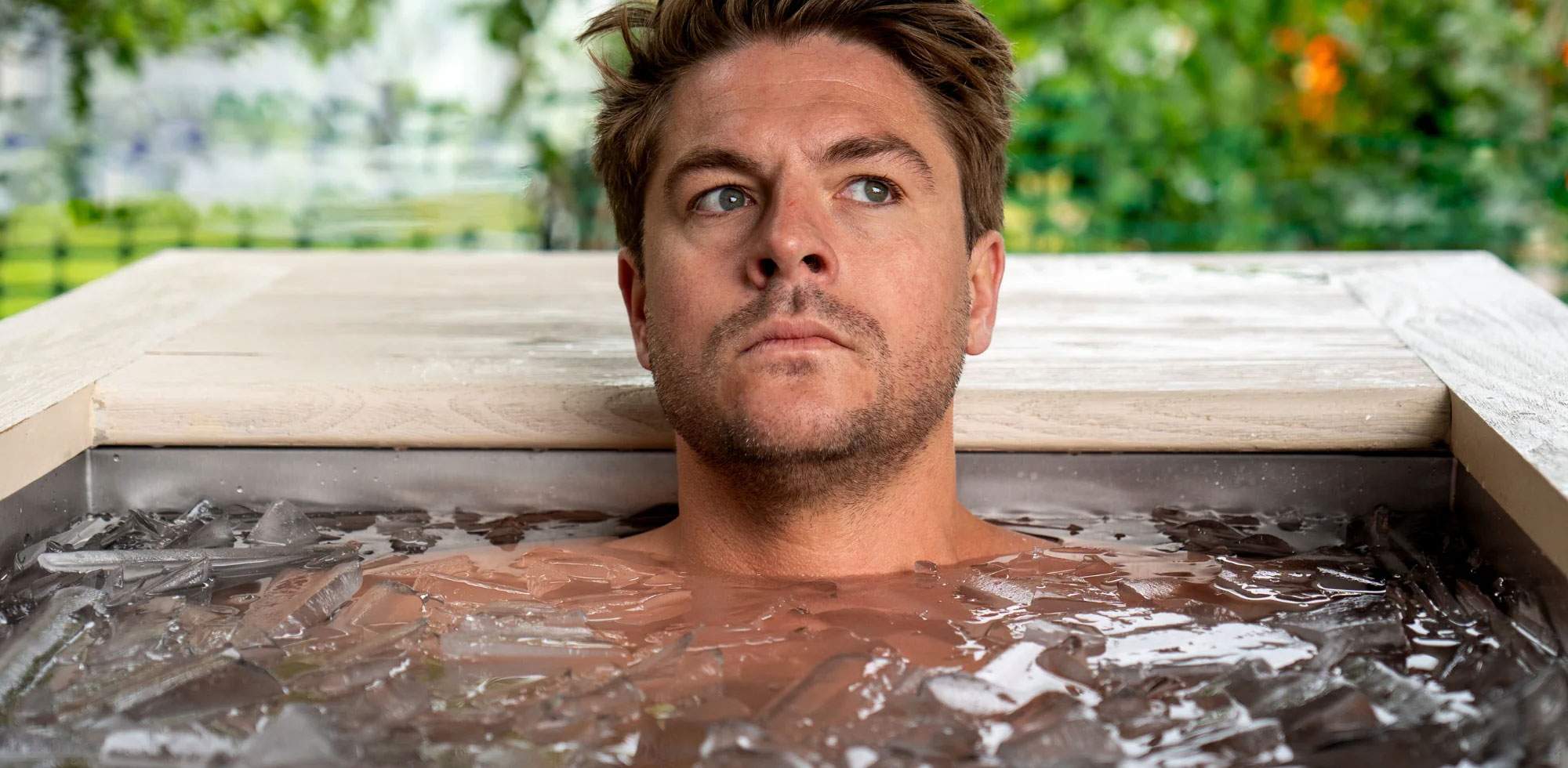
The Benefits of Cold Water Immersion
What the cold is proven to do, where it's emerging and where the evidence currently stops.
The benefits of cold water immersion all anchor to one thing: readiness.
Readiness is a trained feeling. It comes from having done hard things, and come back down. You train it in the cold, for work, life and sport.
Cold water does that in a single session, two ways. Training is the hard thing: you get in, your body reacts hard, and you practise staying calm inside the reaction. Recovery is coming back down; learning to regulate is a skill, not a rest.
Most people arrive for the recovery and stay for the training. Both are real. Both are below.
Everything that follows is graded by how solid the evidence actually is, because a lot of what gets said about cold water runs ahead of what's been shown. We'll tell you which is which.
And we'll keep updating it. Cold water immersion is a young field getting older quickly: more interest, more money, more studies. Some of what reads as emerging today will read as settled in three years. Some of it won't survive contact with a bigger sample.
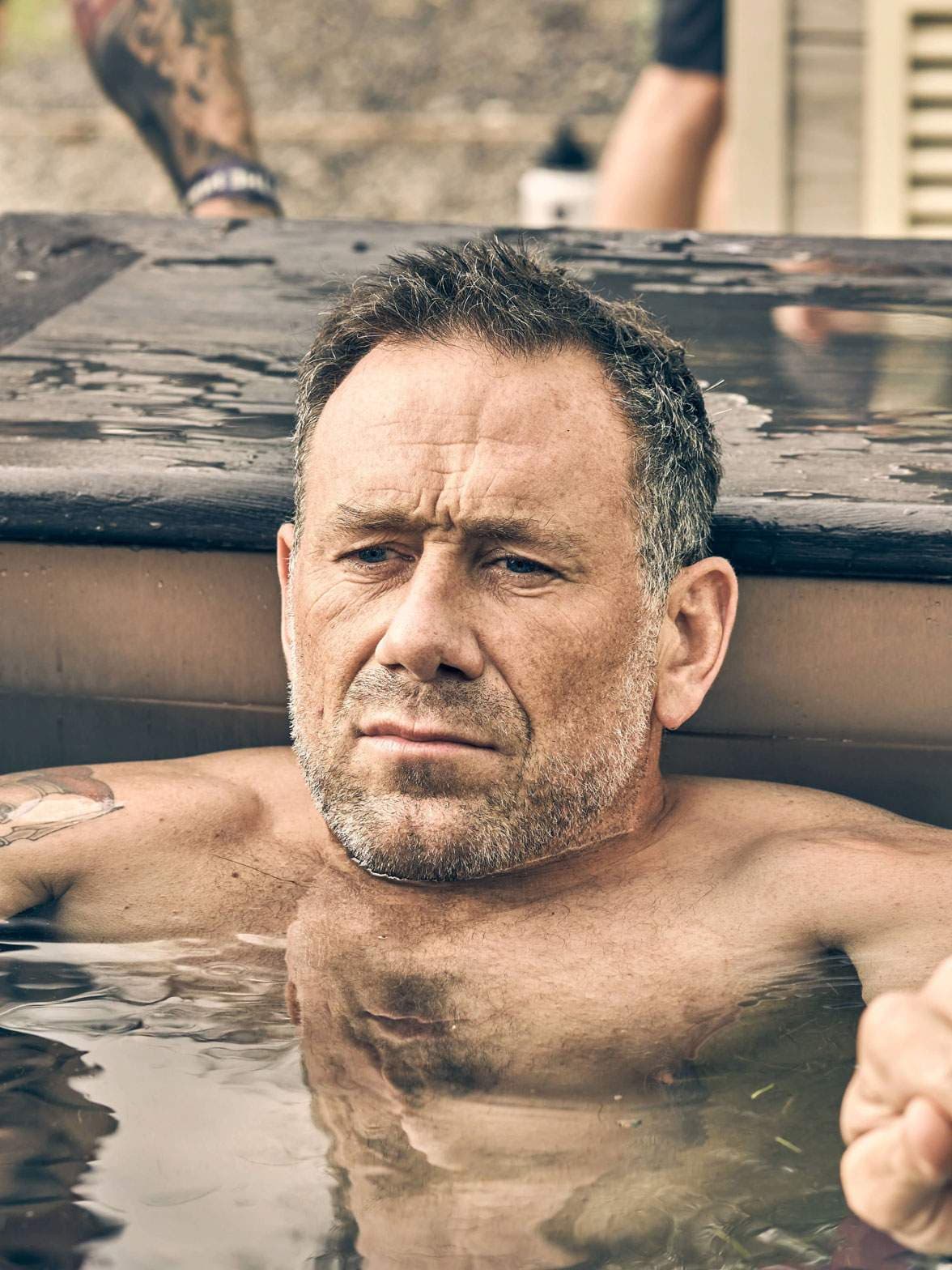
Two minutes, three things
Everything below is one of three things, and they happen in order, every session.
First, it's hard. You get in and your body reacts: the gasp, the racing breath, the heart rate climbing. Noradrenaline arrives at roughly two to three times where it started, and it turns up reliably every time, however used to the cold you get.[1] That reaction is the thing you train to tolerate, and it is the dose. Stress training, on purpose.
Then you stay, and how you stay is the whole thing. Clean, slow breaths. The extended exhale is the real rep. No gasping. Nothing heroic. This is the part that separates a session you do on purpose from something that happens to you. A 20kg dumbbell thrown at you isn't the same event as a 20kg dumbbell you choose to lift. Nobody needs that explaining. Cold is no different. Fall in, panic and hold your breath, and cold water is a genuinely dangerous event. It's dangerous precisely because of what the body does when nobody's steering.[2] Same water, same temperature, completely different event. You're not enduring it. You're training with it.
Then you come down, and this is the bit people feel. You get out and, over the next stretch, your nervous system swings back. The parasympathetic side returns, and returns faster than it would have on its own.[3] That's the calm, loose, even euphoric feeling afterwards, and it's the thing most people mean when they say cold water is good for recovery. They're right. It's just not the whole session. It's the third act of one.
And there's a loop in it. Across weeks, the coming down gets easier, and for two reasons. You've trained a response to the cold. And you've watched yourself do it. People draw conclusions about what they're capable of by observing what they do: Bem (psychologist, 1972) called that self-perception, and Bandura (1977) called doing the hard thing a mastery experience.[4]
The hard part is the training. The coming down is the skill. The feeling afterwards is the proof you did both.
Stress and resilience
Cold water is a stressor you choose, at a dose you control. That's the whole trick. Unlike most of the stress in your life, this one has a start, an end, and a temperature you set. That is what makes it trainable at all.[5]
What happens physically is well established: cold triggers a clean spike of noradrenaline. That's your natural alertness chemical, and it's measured at 200–300% above baseline.[6] Then, as you come out and settle, the calming branch of your nervous system takes over: heart rate can drop by up to 15%, driven by direct vagal activation.[7] Alarm, then a deliberate return to calm. That loop is managed by a slow exhale, and that's the rep.
The shock fades. The effect doesn't. The gasp and the scramble habituate within about four exposures, while the noradrenaline response keeps arriving with repeated exposure. So you don't adapt your way out of the benefit. You adapt out of the feeling of stress and panic.
The most useful thing about the first few sessions is how quickly they stop being brutal. That heart-pounding gasp on entry habituates within about two to four immersions.[8] Week one is the wall, and you're through it faster than you'd think.
So the million dollar question: does the composure you practise in cold water carry into the rest of life? As of right now, the evidence remains genuinely split. Some studies find the connection. Some don't. What we can say is that cold water immersion may train a steadier baseline over time, meaning a better stress response in life, not just in cold water.[9] Our customers report it, it's what many cold dippers will tell you, and it's why we're running a controlled study with Coventry University to find out. We'll publish the result whichever way it falls. What isn't in doubt is what you feel on the day: the lift, the calm on the way out, and a practice that gets easier and stays hard enough to matter. So be your own study. Observe how the cold does, or doesn't, change you when you approach it properly, as training.
Cold showers, and the claim everybody gets wrong.
The famous cold-shower trial, over 3,000 people, found 29% fewer days called in sick. It also found people got ill just as often.[10] Cold didn't boost anyone's immune system. What changed was how they showed up. That's genuine resilience, not a shield: the same trained feeling of being able to meet discomfort or stress, showing up in whether feeling unwell is enough to take you out of the game.
That isn't physiology. People who had done a hard thing on purpose every morning went to work more often. Bandura (psychologist, 1977) calls this a mastery experience: do something difficult and come through it, and what you believe you can handle changes what you can. Bem's self-perception work (another psychologist, 1972) is the other half, you draw conclusions about what you're capable of by observing what you do.
Which brings us to the nervous system.
Nervous system regulation
This is the mechanism underneath everything above, and it's the part most worth understanding.
Your autonomic nervous system has two settings, roughly: go and recover. Modern life is very good at leaving you in go. It gives you almost no practice at deliberately switching back. Cold water immersion is unusual in that it puts you through both, in sequence, in a single short session: hard sympathetic activation on entry[11], then a measurable parasympathetic return afterwards.[12]
Do it repeatedly and the evidence suggests you're training the switch itself. The sympathetic activation and the parasympathetic return happen in sequence across a single immersion, and that sequence is what gets practised.[13] Regular cold water immersion enhances vagal tone via the mammalian diving response. Higher vagal tone correlates with steadier mood and lower anxiety.[14] What regular users consistently describe is the reset getting easier to reach.
A reset you can practise.
Bowl of cold water, breathe normally, face in for a few seconds, or splash your face if you're new to it, up to three times. It fires the dive reflex: a fast, specific parasympathetic response.[15] It's a reset, not a session: it does one narrow thing, and it won't give you any of the adaptation a proper immersion does. But it works when you're wound up and nowhere near cold water.
Two rules. Breathe normally throughout. Never on a held breath, and never straight after breathing exercises. And keep it separate from getting into cold water: face immersion stacked onto the shock of entry is the one combination that carries a real cardiac risk, in healthy people too.[16] Any cardiac or arrhythmia history, skip it.[17]
This is what “regulation” means to us.
Our model of how it stacks runs in three stages. Tolerance: learning to stay. Capacity: doing the hard thing again, and believing you can. Regulation: coming back down. Whether that carries into stress that isn't cold is contested, and we've set out above why we don't claim it.[18] Cold is a clean way to practise it: short, repeatable, and you can watch yourself improve. If you want the methodology, it's on the Cold Standard: the dose parameters, the evidence grading, and how we govern what we claim. The methodology
Recovery, sleep and performance
Recovery is the word most people arrive with, and it's the right one. It just isn't the whole of it. Or at least, it's not primarily about muscle tissue, as most people assume.
Recovery is coming back down.
Cold measurably speeds parasympathetic reactivation after exercise: heart rate and HRV return to baseline faster.[19] That's the reset people feel: a cleaner exit from go mode, not tissue repair magic. It also tends to cut soreness.[20]
On how cold and how long: the most consistent results come from around 10–15°C for five to ten minutes, in the same session block as endurance training.[21] You don't need to go colder than that to get the effect, and chasing colder isn't a shortcut. There's no researcher consensus on an optimal protocol at all, and consistency matters more than intensity.[22] Longer probably isn't better either: the evidence points to a short working window rather than an endurance test.[23]
The timing rule that protects your training.
If you lift for size or strength, don't get in the cold straight afterwards. Routine immersion immediately after resistance training can blunt the adaptation you just trained for.[24] The rule is separation, not a stopwatch. Not in the same session. A different session, or a different day.[25] After endurance, intervals or conditioning it's a different story: straight in is fine, and helpful, with no waiting period.[26]
Sleep, and cold plunge timing.
Cold water immersion does something counter-intuitive to your temperature: it raises core temperature while you're in it, and the drop comes afterwards, as blood returns to cooled extremities and carries heat away with it.[27] That post-exit heat loss is the part worth understanding. Heat leaving through the skin is what tracks with falling asleep, better than core temperature or how fast it changes, and it's the direction your body is already heading when it's getting ready to sleep.[28]
Timing is the practical rule, and it's well established. Morning immersion augments alertness and works with your body clock.[29] Cold in the evening may disrupt sleep, because it's an alertness signal as well as a thermal one. So front-load it.[30]
Beyond timing, there's emerging work suggesting that when you go cold changes what you get from it hormonally and metabolically.[31] The feedback we get is generally that cold water immersion supports people's sleep. That's not proven and it isn't a finding, just common feedback. Why? Hard to say. It may be that the parasympathetic rebound, rest and digest, simply supports a natural circadian rhythm. It may be that you're better at handling stress. Right now, we don't know.[32]
What this is not: a treatment for insomnia or any sleep disorder. It supports a process your body already runs. It isn't a clinical sleep intervention and isn't a substitute for one.[33]
Performance, in the specific cases it applies.
Cooling before exercise helps when the exercise is in the heat: hot climates, heat-exposed sport, outdoor competition in high temperatures.[34] In a temperature-controlled gym there's no established benefit, so we're not going to tell you a plunge before your session will make you faster. Plenty of people say it does, and say it consistently. That's interesting, it isn't evidence, and we won't claim it until someone has shown it properly. Test it on yourself if you're curious. If you're an athlete recovering across back-to-back fixtures, alternating hot and cold clears muscle-damage markers faster than resting between them, though it isn't clearly better than cold on its own.[35]
Metabolic capacity, and the dose.
The claim here is about metabolic capacity: how well your body handles fuel. Not weight. You keep functional brown fat into adulthood, the tissue that burns energy to produce heat, and cold switches it on.[36] It's the strongest area of human evidence in the whole field.[37]
One honest caveat on the mechanism: brown fat is the established part, but how much of the metabolic effect comes from brown fat versus working muscle is being actively revised right now, and so is the part the shivering itself plays.[38]
Why it's worth caring about: more brown fat is associated with a lower prevalence of type 2 diabetes, high blood pressure and heart disease.[39] An association, not a cure.
The dose is small. Around 11 minutes a week, split across two or three sessions of one to three minutes.[40] That figure comes from research run in properly cold water, colder than most home or gym baths. So at a gentler 10–15°C, expect to need a bit longer for the same metabolic effect.[41] More isn't automatically better either way.
And what this isn't: a weight-loss method. Anyone telling you cold water burns fat off you isn't sharing the full picture. If someone gets leaner after taking up cold water, it's far more likely they're getting more disciplined about the slice of cake than the cold is burning it off.[42]
Mood, and the claims we won't make
Ask anyone who's just got out of cold water how they feel and you'll get a version of the same answer: great. Brilliant. Buzzing. Like they could run through a wall. It is far and away the most common thing people say, and it's worth being straightforward about what that is: a subjective report, repeated by almost everyone, which is not the same thing as a measured clinical outcome.[43]
Schachter and Singer (psychologists, 1962) showed that arousal doesn't decide the feeling on its own. The same racing heart is panic in one person and here we go in another, and which one you get is partly practised. That's why the lift is real and reported by almost everyone, and also why it isn't a clinical outcome: what's being described is a state, and a state has an interpretation inside it.
What isn't subjective is the machinery underneath it. The noradrenaline surge[44] and the vagal calm that follows[45] are the post-immersion feeling in two mechanisms.
Here's where we stop. Cold water immersion is not a treatment for anxiety, depression, or any clinical condition. It doesn't diagnose, treat, cure or replace care, and we won't imply otherwise. It's a trainable stress tool that can sit alongside proper support, never instead of it.[46]
Three more we're asked about constantly, answered straight:
“Does it slow ageing?” There are no human longevity studies. The claim is borrowed from animal work and it shouldn't be made.[47] What is real and trainable today: the alertness response[48], metabolic capacity[49], and a faster return to calm after stress.[50]
“Does it reduce inflammation?” Partly, and the distinction matters. After hard exercise it does reduce soreness.[51] That's why athletes get in the cold after competition, and it's real. What it does not do is heal the underlying muscle damage any faster. The soreness improves, the repair doesn't accelerate.[52] And there's no good evidence for durable, whole-body anti-inflammatory effects beyond that acute window.[53] So: useful for soreness, not a treatment for inflammation.
“Does it make you sharper?” It makes you alert: arousal, not reasoning. Cooling the body enough to drop peripheral temperature measurably impairs performance on objective cognitive tasks, which is close to the opposite of the popular claim.[54] Alert and switched-on: yes. Smarter: no.
We publish those corrections on purpose. If a claim can't be graded, it doesn't go on the site.
Is it for you?
Probably, with two honest caveats: it needs to be consistent to be worth anything, and it needs to be safe for you, for your health and for your level of adaptation to cold water.
On consistency: the dose is small. Around 11 minutes a week.[55] But it only counts if it actually happens. The thing that stops most people isn't willpower, it's friction: water that isn't clean and cold when they want it. Whatever you use, the thing that matters is that it's ready when you are.
On safety: the gasp reflex on entry is real: an involuntary gasp, hyperventilation and a jump in cardiovascular strain. It's the genuine risk, especially in open water and especially on your first few goes.[56] Never immerse alone in open water. Responses also differ a lot from person to person; the same dose doesn't land the same way for everyone.[57] If you're pregnant, or you have a heart condition, high blood pressure, Raynaud's, or any condition affected by cold, talk to your doctor before you start. Tell them you're serious about building a proper practice, not asking for a casual health check, and that this involves repeated cold water immersion. That's the conversation worth having.[58]
Where to go next.
Common questions about cold water immersion
Evidence references
- 1.Supported
CWI-2. Johnson et al. 1977. Noradrenaline two to three times baseline, arriving reliably with repeated exposure (CWI-235/81).
- 2.Supported
CWI-20 / CWI-72. Autonomic conflict: cold shock against the diving response. Head above water, no breath-hold on entry.
- 3.Supported
CWI-162. Al Haddad et al. 2010. Parasympathetic rebound on exit and rewarming. No magnitude claimed.
- 4.Convention
Established psychology, credited by originator. Bem 1972 (self-perception); Bandura 1977 (mastery experience). Not a cold-water claim.
- 5.Convention
Dosed-stressor framing.
- 6.Supported
CWI-2.
- 7.Supported
CWI-109. Reactivation is a post-immersion effect.
- 8.Supported
CWI-160 / CWI-166.
- 9.Mixed
CWI-14. Transfer / steadier baseline. Contested (Lunt 2010 positive in the lab, Seeley 2026 null in the field). May is load-bearing.
- 10.Supported
CWI-7.
- 11.Supported
CWI-2.
- 12.Supported
CWI-109 / CWI-162.
- 13.Mixed
CWI-200. Autonomic training across a single immersion is sequential, not simultaneous. Qualified in-sentence because the row is AMBER.
- 14.Supported
CWI-5. Correlates is doing work.
- 15.Supported
CWI-72. Presented as a calming technique only, not an anti-inflammatory treatment.
- 16.Supported
CWI-20. Simultaneous cold shock plus breath-holding or face immersion carries arrhythmia risk even in healthy people (Shattock & Tipton 2012; Tipton et al. 2017). The bound is separation: the dive reflex is safe when it is not stacked on entry or a breath-hold.
- 17.Supported
CWI-54. Structured contraindication framework. Cardiac exclusion stated conservatively.
- 18.Convention
T>C>R, stated as our model, not as a fact about adaptation. Transfer to non-cold stressors is AMBER.
- 19.Supported
CWI-162.
- 20.Mixed
CWI-4. DOMS finding is AMBER and carries no magnitude.
- 21.Mixed
CWI-4 protocol: 10–15°C for five to ten minutes, scoped here to endurance training.
- 22.Supported
CWI-22. No researcher consensus on an optimal dose or protocol. Consistency beats intensity.
- 23.Mixed
CWI-121. Qualified in-sentence (probably, the evidence points to).
- 24.Supported
CWI-6. Direction is sayable (can blunt); absolutes are not.
- 25.Mixed
CWI-118. Session separation, not an interval. No hour-counts.
- 26.Supported
CWI-230. After endurance, interval or conditioning work there is no waiting period. Broatch 2017; Halson 2014.
- 27.Supported
CWI-116 (raises core temperature in water) + CWI-53 (afterdrop). The in-water phase does not cool you.
- 28.Supported
CWI-223. Heat loss, the distal-proximal skin gradient, predicts sleep-onset latency better than core temperature or its rate of change. General sleep physiology, not a CWI sleep claim.
- 29.Supported
CWI-116.
- 30.Supported
CWI-116.
- 31.Mixed
CWI-167. Braunsperger 2025: time of day modulates the hormonal and metabolic response to CWI.
- 32.Convention
Customer feedback, reported as feedback. Neither proven nor a finding.
- 33.Convention
Non-medical framing. Not a treatment for insomnia or any sleep disorder.
- 34.Supported
Pre-cooling benefit is heat-specific (CWI-45/46/47). No established benefit in a temperature-controlled gym.
- 35.Supported
CWI-23. Gill 2006; Vaile 2008. Elite athletes in competition congestion. No superiority of contrast over cold alone.
- 36.Supported
CWI-3. Adults retain functional brown adipose tissue, cold-activated.
- 37.Supported
CWI-3's qualification: strongest human evidence domain in the CWI literature.
- 38.Mixed
Mechanism in active revision. CWI-3 (GREEN) holds BAT retention. The split between brown fat and working muscle is being revised.
- 39.Supported
CWI-88. Association, never "cold prevents heart disease".
- 40.Supported
CWI-112, the Søberg dose. Per week, not per session.
- 41.Supported
CWI-112 methodology note: the 11-minute protocol was run at about 2–8°C; at 10–15°C, session duration may need to increase for equivalent metabolic effect.
- 42.Do not overclaim
Weight-loss myth-bust. Negated only.
- 43.Convention
Reporting what users consistently report is not a science claim.
- 44.Supported
CWI-2.
- 45.Supported
CWI-109.
- 46.Do not overclaim
Non-medical framing. Not a treatment for anxiety, depression, or any clinical condition.
- 47.Do not overclaim
CWI-17. No human longevity studies.
- 48.Supported
CWI-2.
- 49.Supported
CWI-3.
- 50.Supported
CWI-162.
- 51.Mixed
CWI-4. DOMS finding is AMBER and carries no magnitude.
- 52.Mixed
CWI-4. Tissue-repair boundary.
- 53.Do not overclaim
CWI-18. Acute post-exercise soreness is not a treatment for inflammation.
- 54.Supported
CWI-206. Acute peripheral hypothermia impairs cognitive performance (Martin 2019).
- 55.Supported
CWI-112.
- 56.Supported
CWI-1. Cold-shock response (Tipton).
- 57.Supported
CWI-25. Individual variability in cold response is considerable.
- 58.Supported
CWI-54 + CWI-165. Contraindications and elevated cardiovascular risk in at-risk populations.
- 59.Convention
Readiness Dose Card (CWI-234). Cold enough to challenge, composed enough to stay, read in the breath. Ours rather than a finding.
- 60.Mixed
CWI-4. DOMS finding is AMBER and carries no magnitude.
- 61.Supported
CWI-112.
- 62.Mixed
CWI-121.
- 63.Convention
Matched-dose principle. Colder is not better, warmer is not better, matched is better.
- 64.Supported
CWI-163: 12–15°C is not mild. CWI-21: 15°C or lower constitutes cold water.
- 65.Mixed
CWI-4. 10–15°C, five to ten minutes, most consistent DOMS reduction after endurance work.
- 66.Supported
CWI-112 methodology note: 11-minute protocol at about 2–8°C; at 10–15°C, duration may need to increase.
- 67.Supported
CWI-22. No researcher consensus on an optimal protocol; consistency beats intensity.
- 68.Supported
CWI-160 / CWI-166 (habituation within about two to four exposures) + CWI-105 (adaptation timeline).
- 69.Supported
CWI-25. Individual variability in cold response is considerable.
- 70.Supported
CWI-112.
- 71.Supported
CWI-116.
- 72.Supported
CWI-116 + CWI-53.
- 73.Supported
CWI-116. Morning immersion augments alertness; evening may disrupt sleep.
- 74.Mixed
CWI-167. Time of day modulates the hormonal and metabolic response. Qualifier load-bearing.
- 75.Convention
Non-medical framing. Not a sleep treatment.
- 76.Supported
CWI-1 + CWI-164. Cold-shock gasp reflex. No unqualified yes on safety.
- 77.Supported
CWI-54 + CWI-165, with CWI-25 for individual variation.
- 78.Supported
CWI-230. After endurance, interval or conditioning work there is no waiting period.
- 79.Mixed
CWI-118 + CWI-6. Session separation, no hour-counts. Direction sayable (risk blunting); absolutes are not.
- 80.Mixed
CWI-231. Pre-cooling before lifting has no benefit and a likely cost. Do not advise it.
- 81.Supported
CWI-7. The "ill just as often" correction is non-negotiable in this FAQ.
- 82.Supported
CWI-194. Thermoregulatory sex differences: anatomy only. Not better or worse built for cold.
- 83.Mixed
CWI-195. Luteal-phase core-temperature rise is established physiology; the CWI-dose application is untested.
- 84.Mixed
CWI-196. Pound et al. 2024, n=1,114. Associated with / women reported, never reduces.
- 85.Supported
CWI-160 / CWI-166.